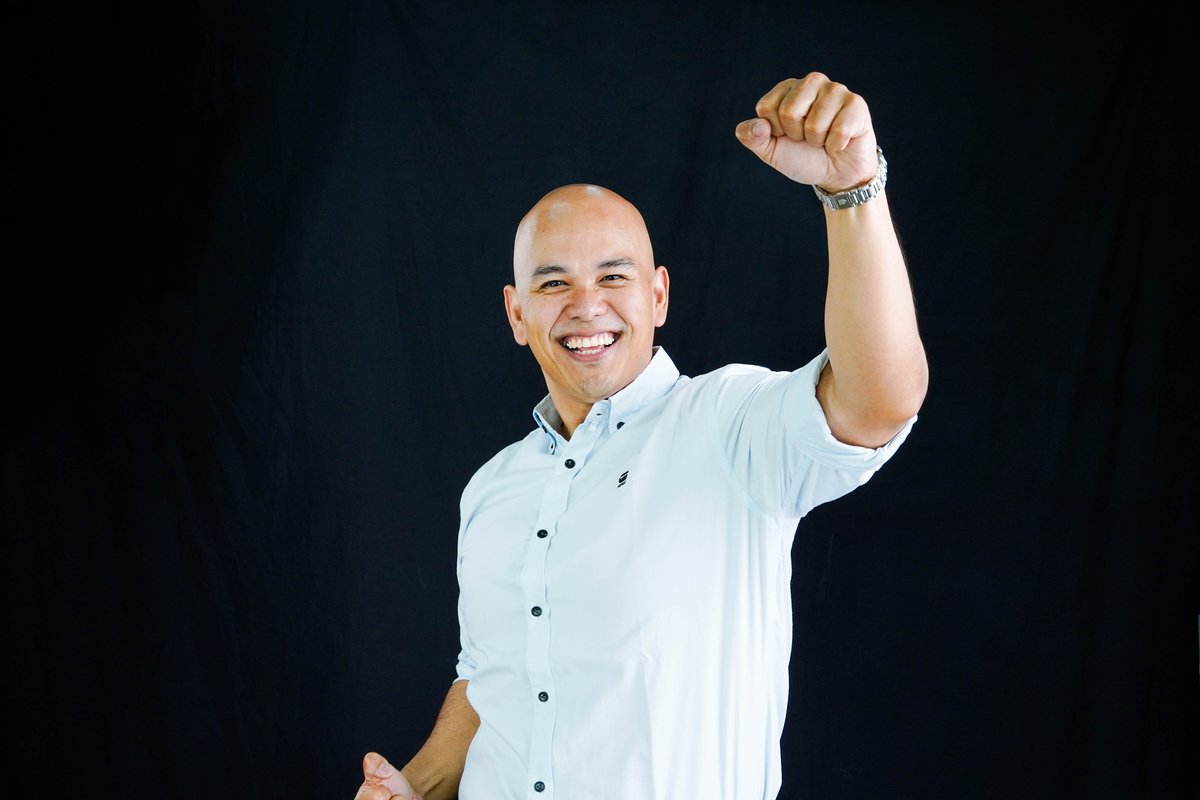
In 2021, Indonesia did something ambitious: it launched one of the largest digital literacy programs in the world, a government initiative under Kemenkominfo (Ministry of Communication and Information Technology) designed to reach millions of Indonesians across the archipelago with foundational digital skills and digital safety education. I was among the speakers brought in to contribute to that effort — and what the experience revealed about Indonesia's digital reality was both inspiring and sobering.
This is what I learned from operating at national scale.
The Scale Is Unlike Anything Else
Nothing in my prior experience of speaking to large rooms or managing communities with tens of thousands of members fully prepared me for what national-scale communication actually means in Indonesia. We are talking about a country of 270 million people across 17,000 islands, with extraordinary diversity in language, culture, digital access, and digital literacy baseline — and a government program attempting to move the needle across all of it simultaneously.
The logistics alone are staggering. The content and delivery challenges are compounded by the diversity. A session designed for a digitally fluent audience in Jakarta needs to be fundamentally reimagined for a rural community in Sulawesi or Nusa Tenggara where the basic infrastructure of internet access is itself still uneven. "Digital literacy" means something very different in those two contexts.
What became clear early: there is no universal message that works at this scale. There are principles, and then there are countless local translations of those principles, each requiring different language, different examples, different pacing, and different underlying assumptions about what the audience already knows.
"The biggest communication lesson of my career came not from a TED stage or a corporate ballroom, but from trying to be genuinely useful to an audience I had very little prior knowledge of."
The Real Gaps in Digital Literacy Are Not What You'd Expect
Before participating in the program, my mental model of the "digital literacy gap" was shaped primarily by the conversations I was already having — with entrepreneurs, with urban professionals, with people who were already online and already navigating digital tools for work. Those conversations gave me a particular picture of what the gap was.
The actual gap, across a broader cross-section of Indonesia, was different. It was less about specific skills — how to use a particular platform, how to conduct a digital transaction — and more about foundational frameworks: what is trustworthy online versus what isn't, how to evaluate digital information, what personal data is and why it matters, how digital economies actually work and where value is created and captured.
The hoax and misinformation problem in Indonesia is not primarily a stupidity problem or a credulity problem. It is a framework problem. When you grow up without a stable model for how to evaluate information sources — when the trusted social networks that serve as verification mechanisms in traditional communities don't have digital equivalents — you are navigating a complex digital information environment without the scaffolding that more digitally saturated environments provide implicitly.
What Works at Scale (And What Doesn't)
Inspiration doesn't scale well. I say this as someone who has built a significant part of their career on speaking to inspire — there is real value in it, in the right context. But at national scale, inspiration without practical uplift produces a momentary feeling without a lasting change in behavior. The emotional peak of a well-delivered message dissipates quickly if there is no concrete skill or habit built on top of it.
What does scale well is specific, actionable, and immediately applicable knowledge. Not "here's why digital literacy matters" but "here's exactly what to check before you share a news article." Not "the digital economy is changing everything" but "here's how you can list a product on this platform today and what happens after you do." The more specific, the more transferable.
Stories also scale well — but they need to be the right kind of stories. Abstract success narratives from people who seem fundamentally different from the audience don't transfer. Specific stories about people who started from a recognizable place and made one particular shift — those land. The aspiration has to be plausible, not just inspiring.
What the Program Confirmed About Indonesia's Potential
The most consistently striking thing across all of the engagements in this program was not the gap — it was the appetite. Indonesians across the spectrum of age, region, and economic background were extraordinarily eager to learn, to participate, to try. The challenge was never motivation. It was access — to the right information, in the right format, in the right language, at the right level of complexity.
When you meet that access challenge well — when the content genuinely fits where people actually are rather than where it's easier to assume they are — the response is remarkable. People who were skeptical of digital tools discovered they could use them. People who thought they were too old or too rural or too undereducated for the digital economy found entry points they hadn't known existed.
The 2021 program was a beginning, not a completion. Digital literacy at the national scale Indonesia needs is a multi-decade project, not a campaign. But participating in it clarified something important about the country and about the work of building something meaningful at scale: the hunger is there. What it requires is people and institutions willing to meet it — persistently, specifically, and with genuine respect for the complexity of the audiences they're trying to reach.
Interested in Large-Scale Digital Literacy or Entrepreneurship Programming?
Klemens is available for government collaborations, corporate digital literacy programs, and national-scale speaking engagements on digital economy and entrepreneurship.
Discuss a Collaboration ↗ More Articles